

"Small Oasis surrounded by chaos!!"
June 2026
Drone photo by Hedrick Rivero


Click on any photo to enlarge and enjoy the photos at your own pace
or images rotate every 6 seconds; to see the species name hover over the photo
All photos that are currently being featured on our Tiny Travelers webpage, were taken by Hedrick Rivero over the summer from June to date. Information was researched by Hedrick on some of these interesting creatures and shared with GH Audubon as part of our mission to educate the GH community.

Ceraunus Blue: tiny butterfly with wingspan 1-1.25 inches. Seen flying low to the ground in grassy and weedy areas around the garden. This is different to the Cassius Blue, which is seen on our poster at the entrance of the Audubon Gardens, in that it only has one “eye” in its wing. The Cassius Blue has two.
To capture the picture of the beautiful Ceraunus Blue, Hedrick laid flat on the ground between the cart path and the entrance to the Audubon Gardens for a long time. The are tiny and do not stop moving. We appreciate the dedication!
White Peacock butterfly showing its long proboscis used to sip nectar.


Dainty Sulphur butterfly. Smallest of the Sulphur butterflies measuring 2-3 cm. Seen flying erratically (almost non stop) low to the ground. Hard to tell how beautiful they are because they are fast and small. You almost always see them just before entering the gardens on the left west of the cart path on the ground at the lowest plants.
Eastern Amberwing Dragonfly - One of the smallest dragonflies. Mimics a wasp for protection!

Honeybee Hard at Work
Pollinate Away!


Yellow and Black Garden Spider. “Writing Spider”, Zipper Spider”. Known for its complex zigzag design in the center of its web. Suspected to reflect UV light and attract prey to its web

Long Jaw Orb Weaver: The two bulbous structures projecting from the face are mandibles. They feed on mosquitoes, midges and mayflies. They are also called “Stretch Spiders” because when they rest or hide the stretch themselves along twigs (right) making them hard to see.


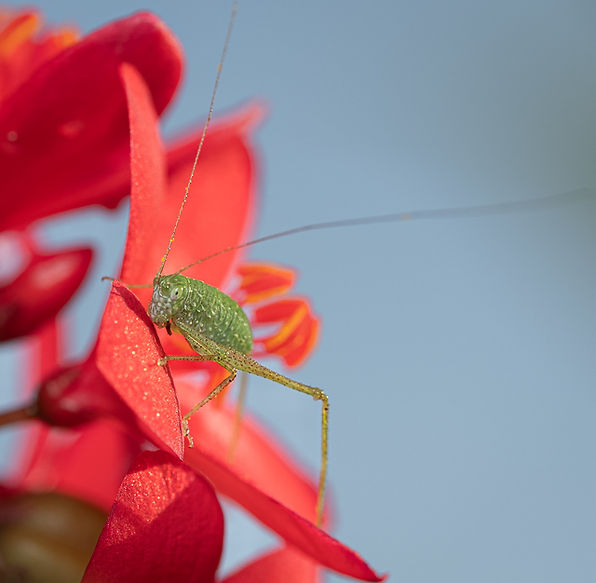
Katydid Nymph:
Looks like a grasshopper but not closely related. About 5mm in size. More closely related to crickets. Recognized by super long antennas and blunted round abdomen. Feeds on petals and leaves but so small that damage is very minimal
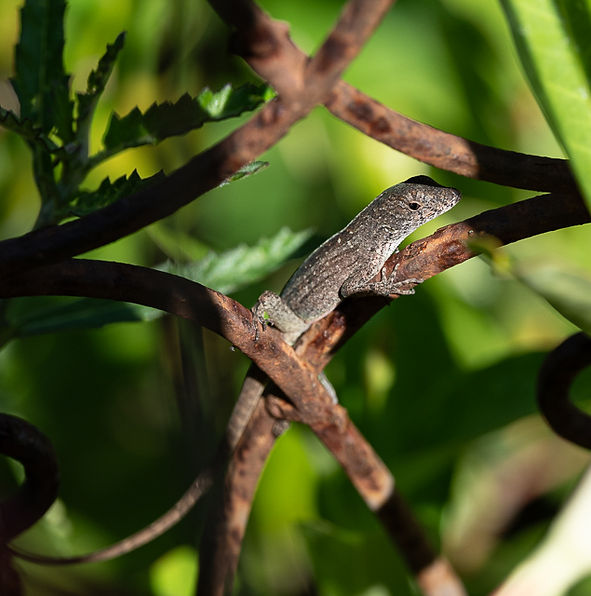
Brown Anole: Invasive into most of the Southeastern U.S. from Cuba and The Bahamas. Probably imported through eggs deposited in soil of tropical plants. Beneficial in that it eats lots of insects. Has displaced the native Green Anole and has become the most common lizard in Florida.
Leaf Beetle: One of the largest families of insects. There are thousands of species. This one is Cryptocephalus irroratus. Found in North America and Central America. They feed on leaves and flower


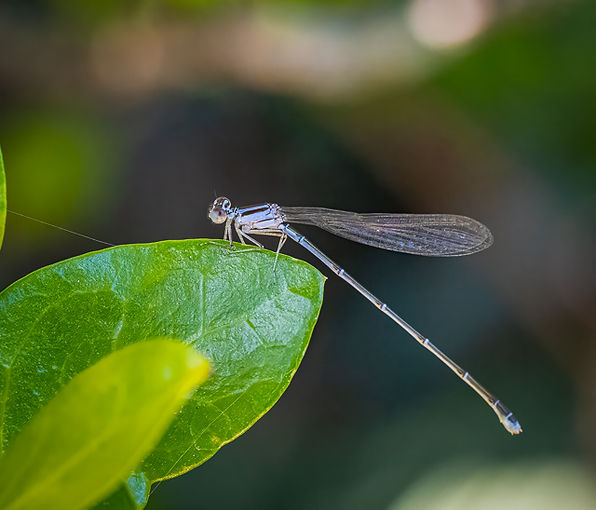
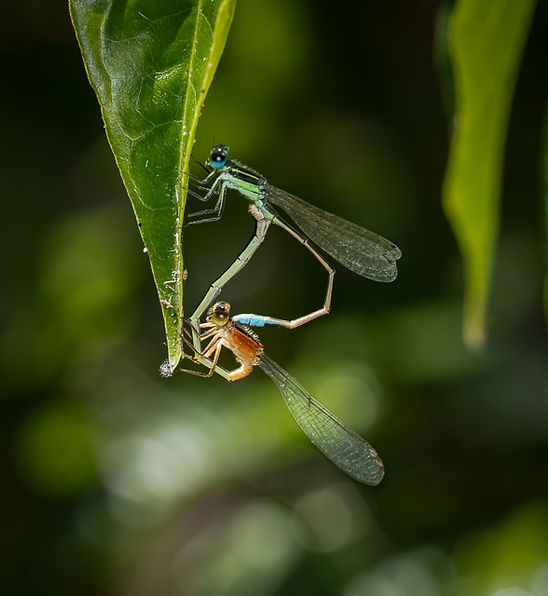
Damselflies: Orange and blue! Same species may have different colors depending on maturity or sex. Blue tend to be males. Pink, violet and variations of blue are females.
Orange is associated to immaturity or young damselflies


Scoliid Wasp: Hairy, bulky wasp which is an excellent pollinator. Adults feed on nectar and pollen. Most interesting is that female will search and sting grubs on the ground, lays eggs on the grub and the larvae feed on the victim which reduce damaging pests in your garden. Harmless to humans unless handled or threatened.
Carrot Wasp: Pollinator. Abdomen is long and thin, and it sticks up from where it joins the thorax by a very narrow waist. Interesting that they deposit eggs in other insect nests (mostly wasp and bees). When the larvae are born the feed on the host insect or the food brought to the host’s nest.


Labyrinth Orb Weaver: Intimidating looking but harmless to humans! ( Metepeira labyrinthea)
Difficult to photograph because it sits deep within confluence of leaves. Characteristic messy web. Outer potions looks fairly well made but the inner part is a disorganized mesh of silk that serves as a retreat. Found throughout the U.S all the way to Argentina.


Spiny Assassin Bug: (Sinea diadema) Harmless to humans but deadly to pest insects. Will stab insects with his curved beak and inject digestive
saliva that dissolves the insides of the victims. Natural predator of garden pests.
Condylostilus mundus: Small fluorescent fly that is very helpful in controlling garden pests. Eats aphids and mites. Harmless to plants and humans. Males are blue and females green. Found from North Carolina through West Indies all the way to Brazil. Very common in Florida


Condylostylus Flies: The color may overlap but in general fluorescent males are blue and females green. Great to have in the garden because they feed on garden pests such as aphids and mites.
Mating Damselflies
“This specific loop is unique to dragonflies and damselflies, often forming a distinct heart shape
during copulation.”
- AI explanation regarding unique loop
Predation: Orb Weavers with Mosquito, Dragon fly and Damselfly


Pollinate Away!
Pollinate Away!
Pollinate Away!
Pollinate Away!
Pollinate Away!
Pollinate Away!